
Will Kava Treat Your Anxiety?
What is Kava?
In this article
What is Kava?
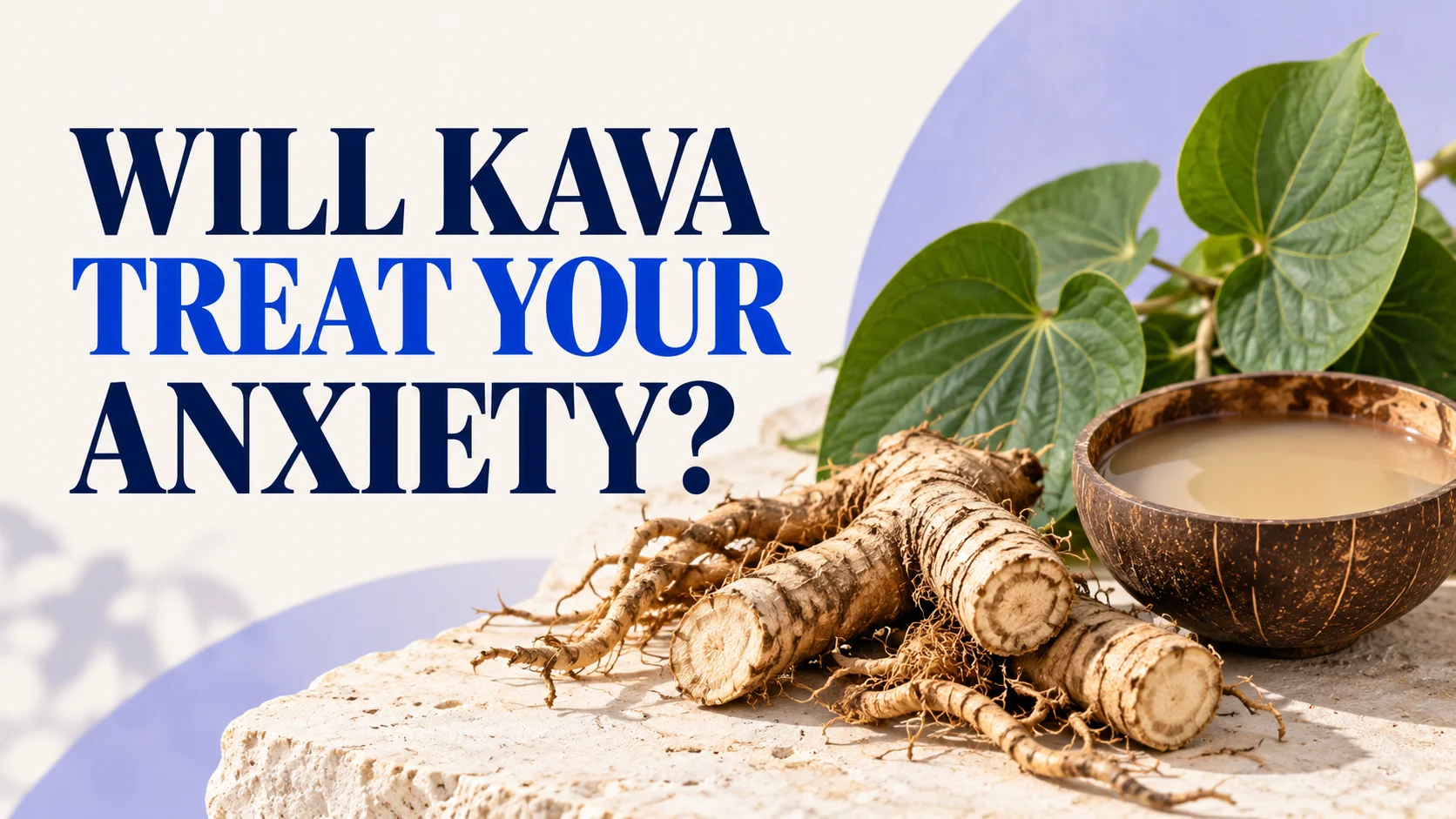
Kava is a plant native to many pacific islands. In Tongan, the word “kava” translates to bitter. This is because of the plants' bitter taste. Its roots are ground up and then steeped in water or coconut milk to create a beverage. It has some mild psychoactive effects and can create anxiolysis and a sense of euphoria. It may also produce an anesthetic-like effect and treat pain. It is available to buy for drink preparations. It can also be bought in capsule form. The best effect is achieved by using the traditional pacific islander methods to prepare the drink.
History of Kava
Kava has historically been an important part of Pacific Island cultures for many centuries, with rituals often attending its consumption. Its main use has been to create a relaxed state in ceremony attendees by causing a numbing effect in the mouth, followed by anxiolytic and muscle relaxant effects. A state of sleep can then be induced. Typically, no hangover effects are experienced. The kava drink has been used to represent respect and hospitality for visiting authorities. Research about Kava was initiated in the 19th century. In the early 1900s, kava was used as a diuretic, for gonorrhea as well as nervous disorders. It is one of the top selling plant/botanical products in the United States.
Mechanism of Action of Kava
The mechanism of action of Kava is not well understood. The primary active constituents in Kava resin include kavalactones, chalcones, flavanones, and conjugated diene ketones. Theorized mechanisms include enhanced ligand binding activity at gamma-aminobutyric acid (GABA) receptors, reversible inhibition of monoamine oxidase (MAO)-B, and reduced uptake of norepinephrine and dopamine. Any one of these mechanisms or a combination of them would explain Kava’s effectiveness and anxiolytic like effects.
Evidence for use
Article #1 “Conclusions: While current evidence supports kava for generalized anxiety, more studies are required to assess comparative efficacy and safety (on the liver, cognition, driving, and sexual effects) versus established pharmaceutical comparators.”
Sarris J, LaPorte E, Schweitzer I. Kava: a comprehensive review of efficacy, safety, and psychopharmacology. Aust N Z J Psychiatry. 2011 Jan;45(1):27-35. doi: 10.3109/00048674.2010.522554. Epub 2010 Nov 15. PMID: 21073405.
Article #2 “Reviewer's conclusions: Compared with placebo, kava extract appears to be an effective symptomatic treatment option for anxiety. The data available from the reviewed studies suggest that kava is relatively safe for short-term treatment (1 to 24 weeks), although more information is required. Further rigorous investigations, particularly into the long-term safety profile of kava are warranted.”
Pittler MH, Ernst E. Kava extract for treating anxiety. Cochrane Database Syst Rev. 2003;(1):CD003383. doi: 10.1002/14651858.CD003383. PMID: 12535473.
Article #3 “This meta-analysis has no publication bias, no remarkable heterogeneity and is based on trials with high methodological standards. It is concluded that WS1490, and possibly other kava extracts, are effective. Therefore they remain alternatives to benzodiazepines, selective serotonin re-uptake inhibitors (SSRIs) and other antidepressants in the treatment of non-psychotic anxiety disorders.”
Witte S, Loew D, Gaus W. Meta-analysis of the efficacy of the acetonic kava-kava extract WS1490 in patients with non-psychotic anxiety disorders. Phytother Res. 2005 Mar;19(3):183-8. doi: 10.1002/ptr.1609. PMID: 15934028.
Article #4 “Conclusions: We conclude that sleep disturbances associated with non-psychotic anxiety disorders can be effectively and safely treated with kava extract WS 1490.”
Lehrl S. Clinical efficacy of kava extract WS 1490 in sleep disturbances associated with anxiety disorders. Results of a multicenter, randomized, placebo-controlled, double-blind clinical trial. J Affect Disord. 2004 Feb;78(2):101-10. doi: 10.1016/s0165-0327(02)00238-0. Erratum in: J Affect Disord. 2004 Dec;83(2-3):287. PMID: 14706720.
Article #5 “Conclusions: The aqueous Kava preparation produced significant anxiolytic and antidepressant activity and raised no safety concerns at the dose and duration studied. Kava appears equally effective in cases where anxiety is accompanied by depression. This should encourage further study and consideration of globally reintroducing aqueous rootstock extracts of Kava for the management of anxiety.”
Sarris J, Kavanagh DJ, Byrne G, Bone KM, Adams J, Deed G. The Kava Anxiety Depression Spectrum Study (KADSS): a randomized, placebo-controlled crossover trial using an aqueous extract of Piper methysticum. Psychopharmacology (Berl). 2009 Aug;205(3):399-407. doi: 10.1007/s00213-009-1549-9. Epub 2009 May 9. PMID: 19430766.
Side Effects/ Adverse reactions / Contradictions
Kava is not free from side effects. Side effects of kava consumption may include oral anesthetic effects (especially of the tongue), such as tingling and numbness. sedation, euphoria, tremors, and ataxia (the loss of full control of bodily movements). Visual impairment has also been described. There was a significant increase in libido in female patients receiving kava during a GAD (Generalized Anxiety Disorder) study. Heavy consumption of kava can produce a scaly skin rash like pellagra, it is commonly known as "kava dermopathy." It can develop on the palms of the hands, bottoms of the feet, and back. Urinary retention, worsening of Parkinson disease, extrapyramidal effects, severe rhabdomyolysis (breakdown of muscle tissue), and GI (Gastrointestinal) discomfort, have been reported. Kava should be used cautiously in patients with renal or liver disease, blood disorders, Parkinson disease, or depression.
Positives or Pros of Kava
- Encouraging short-term anxiety findings: A six-week randomized trial found greater anxiety improvement with a specific aqueous kava extract than with placebo. This offers a reason for continued interest, although results differ between studies and products.1
- Accessible without a prescription in the United States: Kava is sold as beverages and dietary supplements, including at some kava bars. Availability can be convenient, but supplements are not FDA-approved before sale.2
- Some reassuring short-term tolerability findings: An analysis of the six-week trial found no significant group differences in liver tests or withdrawal/addiction measures. Those findings describe that preparation and study period; they do not establish that every product or prolonged use is risk-free.3
Negatives or Cons of Kava
- Benefits are inconsistent, and a lasting response is uncertain: A larger 16-week trial involving 171 people with generalized anxiety disorder did not find that its kava extract worked better than placebo. Kava is therefore not an established long-term treatment for GAD.4
- Rare but potentially serious liver injury: Cases have involved both extracts and water-prepared drinks. Traditional preparation does not guarantee safety. Review use with a healthcare professional, especially if you have liver concerns.2
- Side effects and interactions: Dizziness and digestive upset can occur. Do not combine kava with alcohol or sedating medicines such as benzodiazepines; discuss other medicines with a clinician or pharmacist.2
- Heavy or prolonged use can affect the skin: Long-term high-dose use may cause kava dermopathy, with dry, scaly, flaky skin.2
- Product and preparation differences matter: Cultivar, plant parts, extraction and contamination can affect safety. Trial results from one preparation cannot automatically be applied to another; capsule format alone does not tell you whether a product will work.124
- Improved concentration is not an established benefit: A small acute study found no cognitive impairment, which is different from showing better concentration. The larger GAD trial reported memory difficulties more often with kava than placebo.45
The Anxious Resistance Take
Kava may be good for the occasional anxious episode but may not be a viable long-term solution. Current data indicates that Kava is not addictive. Kava has a fair amount of side effects and should be used with caution. It has been well-established as an effective treatment for anxiety and temporary mood boost. Although this substance is cheap, it may be difficult to find quality Kava. Kava is probably best when prepared in the traditional way at Kava bars or clubs. Kava use is legal in the United States and has few restrictions. As with all supplements, use common sense and inform your doctor of your use of such substances.
References
- Sarris et al. (2013) — six-week randomized placebo-controlled trial in generalized anxiety disorder
- NCCIH (updated April 2025) — Kava: Usefulness and Safety
- Sarris et al. (2013) — adverse effects, liver tests, withdrawal/addiction and sexual-function analysis of the six-week trial
- Sarris et al. (2020) — 16-week randomized placebo-controlled trial in 171 participants with GAD
- Sarris et al. (2012) — acute kava, oxazepam and cognition crossover study

