
Unveiling the Truth: Vitamin B-12's Link to Mental Well-being
How B12 supports the nervous system, when low levels may matter for mood and concentration, and what testing and treatment can offer.
In this article
Vitamin B12 matters to both physical and mental well-being. When deficiency contributes to symptoms, identifying and treating it offers a practical opportunity to address a treatable part of the picture.16
Why the brain needs vitamin B12
Vitamin B12, or cobalamin, supports healthy nerve function, the protective myelin around nerves, DNA production and red blood cell formation. It also helps convert homocysteine to methionine, a building block used to make S-adenosylmethionine, or SAM. SAM supplies chemical groups used in many cellular processes.1
Deficiency can affect more than a blood count. The question is whether B12 status contributes to a person's symptoms.2
How low B12 can show up
Deficiency can accompany fatigue, concentration and memory problems, depression or anxiety, and tingling or balance difficulties. It can occur without anemia or enlarged red blood cells.2
These symptoms overlap with other conditions. New or worsening neurological symptoms, especially walking or balance difficulties, warrant prompt assessment.2
What the depression research suggests
A small randomized trial in 73 people with depression and low-normal B12 levels found greater symptom improvement when injectable B12 was added to antidepressant treatment than with antidepressants alone. That is an encouraging signal for a selected group whose initial medication treatment had not helped enough.3
It was a small study, and improvement was measured over three months. It supports further investigation and attention to B12 status; it does not establish injections as a general antidepressant treatment for everyone.3
A separate review of randomized trials found no reliable improvement in depressive symptoms from supplementation in people without overt B12 deficiency. Those studies largely addressed a different population and excluded major depression. The distinction is useful: correcting a deficiency and adding extra B12 when levels are adequate are different treatment questions.4
Who might be at higher risk?
Risk can rise with a vegan diet that lacks reliable fortified foods or supplements, autoimmune problems affecting absorption, stomach surgery, or intestinal conditions such as Crohn's disease. Metformin and acid-suppressing medicines can also contribute. Deficiency can involve absorption as well as intake, so eating B12-containing foods does not always settle the question.5
Tell your clinician about your eating pattern, digestive history and medicines. Do not stop a useful prescribed medicine on your own; ask whether monitoring or replacement is appropriate.
Testing: look at the result and the symptoms together
Assessment commonly starts with total or active B12 testing. An indeterminate result may need clarification with methylmalonic acid, or MMA, in someone with symptoms. Interpretation belongs alongside the clinical picture, rather than a single number in isolation.2
Tell the clinician about supplements or injections you already use. Blood samples are ideally taken before replacement begins, but suspected serious neurological involvement can require treatment without waiting for results. Arrange the assessment rather than delaying care to get a perfect test.2
Food sources and replacement options
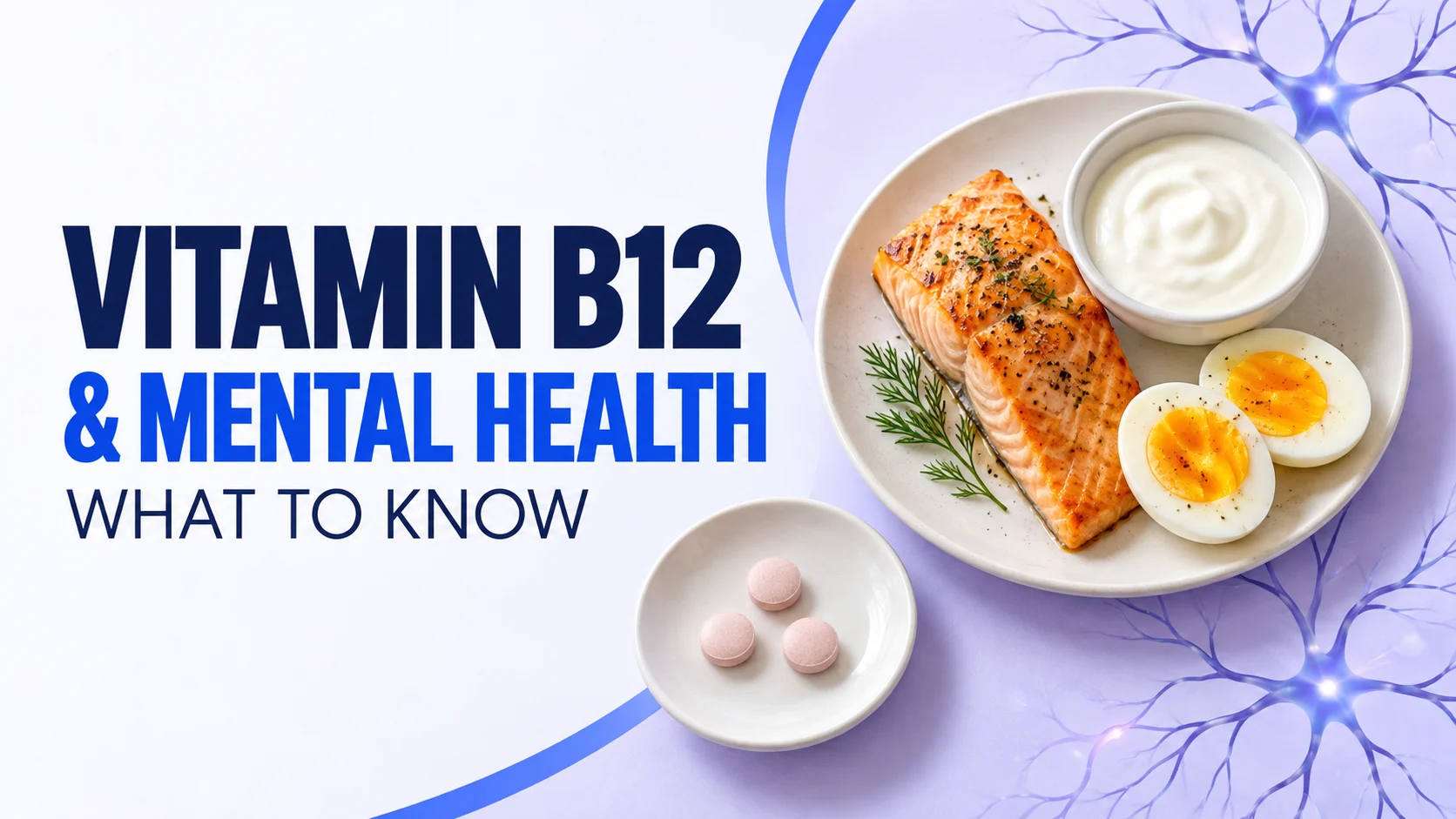
Fish, meat, eggs and dairy provide B12. Fortified cereals, fortified nutritional yeast and other explicitly fortified foods can help people who avoid animal products. Check labels: unfortified plant foods are not dependable B12 sources.1
When deficiency is diagnosed, replacement may involve tablets or injections, depending on its cause and the person's symptoms. Some absorption problems require ongoing treatment. The plan should also include follow-up to check how symptoms and the deficiency are responding.6
An injection is not automatically the best choice for every situation. The aim is reliable replacement through an appropriate route, with a plan suited to why B12 became low.6
B12 in energy drinks: a separate issue
B12 helps normal metabolism, but more is not necessarily an energy upgrade. NIH notes that supplementation has not shown performance benefits when B12 status is already sufficient.1
Energy drinks commonly combine caffeine with other ingredients. Caffeine can worsen anxiety and disrupt sleep, which can work against the reason someone reached for the drink. A B12 claim on the label does not remove those effects.7
If fatigue is persistent, discussing its cause is more useful than repeatedly trying to push through it with a caffeinated drink.
A practical, hopeful next step
B12 is worth considering as one part of a broader conversation about mood, concentration and fatigue. Bring your symptoms, diet, supplement list and medication history to an appointment. Finding a correctable contributor can be a useful step forward while you continue the mental-health care that fits your needs.
By Birk Gundersen, RN, BSN.
References
- NIH Office of Dietary Supplements — vitamin B12 roles, food sources and energy claims
- NICE NG239 — recognizing, diagnosing and managing vitamin B12 deficiency in people over 16
- Syed, Wasay and Awan (2013) — randomized B12 augmentation trial in depression with low-normal B12
- Markun et al. (2021) — systematic review of supplementation, cognition and depressive symptoms without overt deficiency
- NHS — dietary, absorption-related and medication-related causes of B12 deficiency
- NHS — treatment and follow-up of B12 deficiency
- National Center for Complementary and Integrative Health — energy drinks and caffeine risks

