
Vagus Nerve Stimulation: How It Works, Benefits, and Risks
A practical guide to implanted VNS, its role in difficult-to-treat depression and epilepsy, and how it differs from noninvasive approaches.
In this article
When several treatments have not helped enough, it can be encouraging to learn that other options exist. Vagus nerve stimulation, or VNS, is one approach specialists may consider for selected people. It is a medical treatment with specific uses, practical commitments, and risks—not a general-purpose way to reset the nervous system.
What is vagus nerve stimulation?
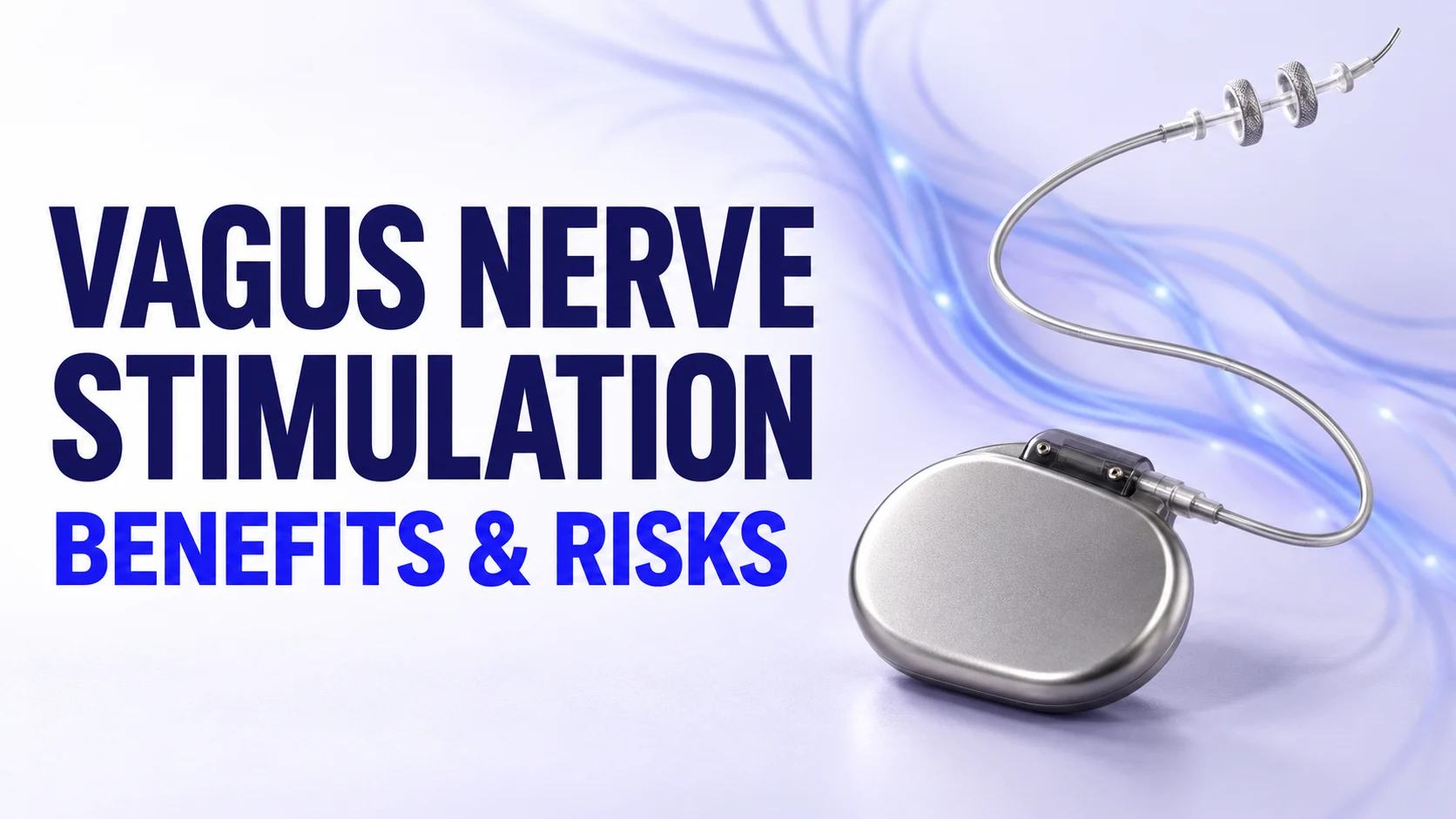
The vagus nerve carries signals between the brain and organs in the body. Implanted VNS delivers controlled electrical pulses through a lead connected to the left vagus nerve in the neck. A small, battery-powered pulse generator sits beneath the skin in the upper left chest.1
Implantation involves chest and neck surgery, not surgery inside the brain. The healthcare team programs the device and adjusts stimulation over time. The treatment aims to influence brain networks involved in functions such as mood; its antidepressant mechanism is not fully understood.12
Where VNS fits in treatment
Implanted VNS has established medical uses in certain forms of epilepsy. For depression, the FDA approved it in 2005 as an additional, long-term treatment for adults with chronic or recurrent depression who are experiencing a major depressive episode and have not responded adequately to four or more adequate antidepressant treatments.3
It is not a first treatment for depression. A specialist reviews the diagnosis, previous treatments, medical history, and other options before recommending it. Other depression care usually continues alongside VNS.23
What does the depression research show?
There are encouraging findings, but the evidence is mixed. The 2025 RECOVER trial followed 493 adults with markedly treatment-resistant depression for a year, comparing active stimulation with a no-stimulation sham condition. It did not find a statistically significant difference on its prespecified primary outcome. Some secondary measures of depressive symptoms favored active VNS.4
That combination matters: the trial offers signs of benefit without establishing that everyone will improve. Ask your specialist how the research relates to your treatment history and what would count as a meaningful improvement for you.4
For depression, improvement can take several months rather than days. VNS is a longer-term treatment strategy, not a rapid rescue treatment for a mental-health crisis.2
What treatment involves day to day
After recovery from implantation, the device is activated and programmed during follow-up visits. Stimulation usually cycles on and off automatically. Settings are adjusted by the clinical team according to benefit and tolerability; there is no universal setting for everyone.1
Ongoing care includes symptom reviews, checking the device, and eventually replacing the generator when its battery is depleted. Ask how follow-up will work, what costs or insurance requirements apply, and whom to contact if stimulation becomes uncomfortable.1
Side effects and safety considerations
Surgery carries risks such as infection, pain, and vocal-cord injury. During stimulation, people may notice hoarseness, cough, throat discomfort, shortness of breath, or swallowing difficulty. Adjusting stimulation can sometimes reduce these effects. Sleep apnea may also worsen.15
Tell the team about heart or breathing problems, sleep apnea, swallowing difficulties, previous neck surgery, and other implanted devices. These require individual review rather than a blanket assumption that everyone can—or cannot—have VNS.5
Medical procedures need planning. MRI may be possible only under device-specific conditions. Certain forms of diathermy, which use energy to heat tissue, are contraindicated with an implanted VNS system. Always tell treating clinicians and imaging staff about the implant, even when it is turned off.5
What about noninvasive devices and vagus-nerve exercises?
Noninvasive VNS uses stimulation through the skin rather than an implanted lead. Particular devices have particular indications; they should not be treated as interchangeable with implanted VNS. Noninvasive VNS is being studied for depression, but it is not currently FDA-authorized for that purpose.2
Likewise, everyday relaxation practices and online “vagus nerve” techniques are not the same intervention used in implanted-VNS depression trials. Evidence for one approach cannot simply be transferred to another. Ask exactly which device or method is being discussed and what evidence supports that use.
Questions worth bringing to a specialist
Which problem are we targeting? What other treatments remain reasonable? How long should we allow to assess benefit? What are the surgical and stimulation risks in my situation? How would the implant affect scans, other care, and future procedures?
VNS can be a worthwhile option to explore when established treatments have not provided enough relief. A useful conversation balances that possibility with the commitment involved, so your next step is informed and aligned with what matters to you.
References
- Mayo Clinic. Vagus nerve stimulation: uses, procedure, risks, and follow-up.
- National Institute of Mental Health. Brain Stimulation Therapies: Vagus Nerve Stimulation.
- U.S. Food and Drug Administration. VNS Therapy System, depression indication (P970003/S050).
- Conway and colleagues (2025). Vagus nerve stimulation in treatment-resistant depression: A one-year, randomized, sham-controlled trial. Brain Stimulation.
- LivaNova. VNS Therapy System: Patient Safety Information, depression indication (February 2025).

