
Unveiling Eriksons Stages of Development: Impact on Mental Health
A clear guide to Erik Erikson’s eight psychosocial stages—and how they can offer perspective without defining anyone’s future.
In this article
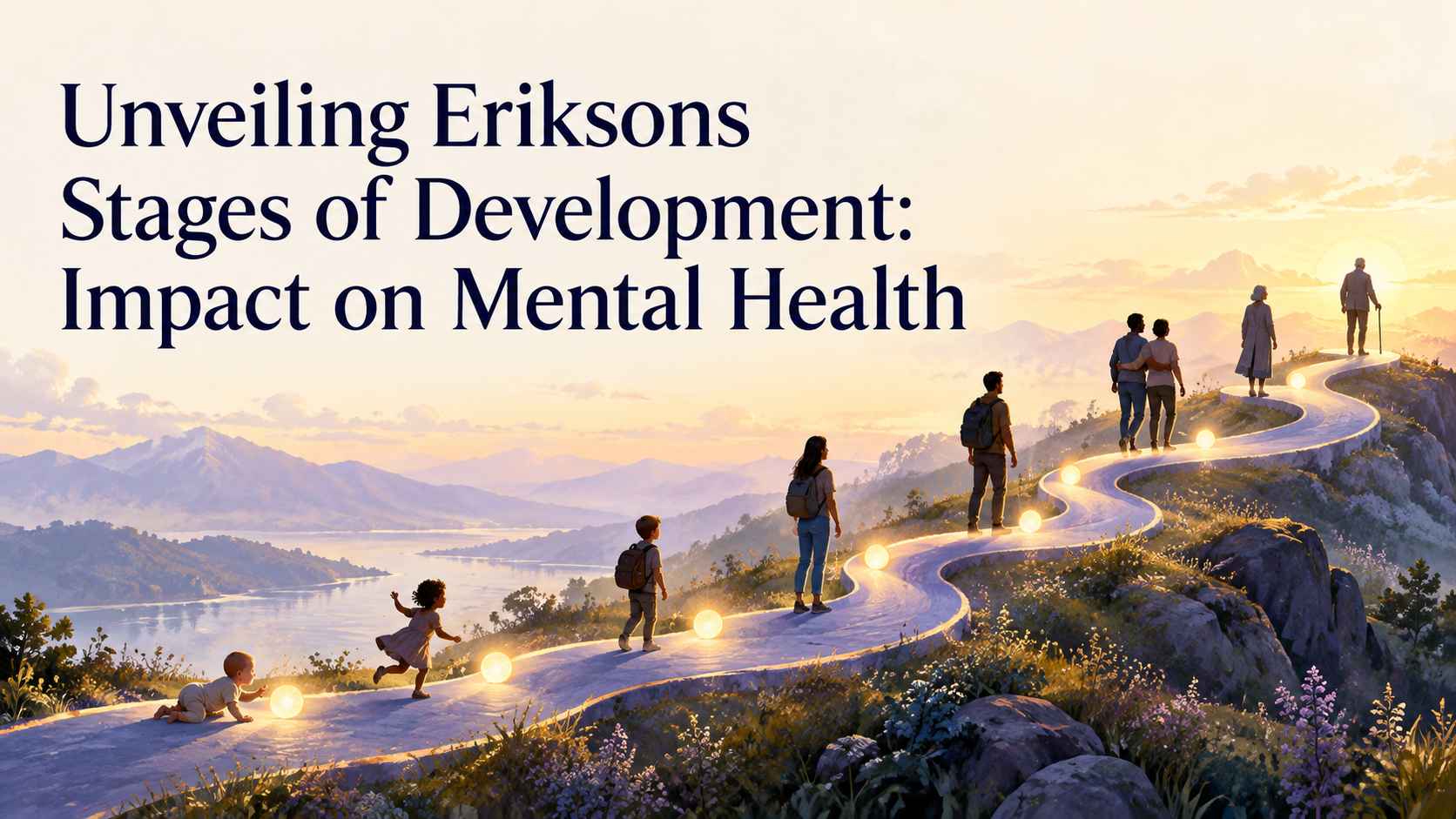
Erik Erikson’s theory of psychosocial development describes eight broad challenges people may encounter across a lifetime. It highlights how relationships, identity, contribution, and reflection can matter at different points in life. The stages can be a useful way to start a conversation about growth—but they are a framework, not a checklist that determines someone’s mental health or future.¹²
What Erikson’s theory describes
Erikson proposed that development continues from infancy into older adulthood. Each stage centers on a tension between two needs or experiences—for example, building trust while also learning that the world is not always predictable. The goal is not to eliminate one side. Ideally, people develop resources that help them meet the challenge while remaining able to adapt.12
The familiar age ranges are approximate teaching guides, not deadlines. People can revisit questions of identity, trust, connection, and purpose at many ages. Culture, relationships, health, opportunity, and life events all shape development, so no single timeline fits everyone.13
Stage 1: Trust vs. mistrust
Infancy. Consistent, responsive care can help an infant begin to expect that comfort and basic needs will be met. This is not about perfect caregiving; every family faces strain, and repair and support matter too.
Stage 2: Autonomy vs. shame and doubt
Early childhood. As toddlers practice choices and new skills, patient encouragement can support independence. Safe limits are part of this learning, not evidence that a child has failed.
Stage 3: Initiative vs. guilt
Preschool years. Children explore, imagine, and try out ideas. Guidance can help them take initiative while learning that mistakes and boundaries are a normal part of growing.
Stage 4: Industry vs. inferiority
School age. Learning, practice, and recognition of effort can build a sense of competence. Children benefit from support that values progress rather than constant comparison with others.
Stage 5: Identity vs. role confusion
Adolescence. Young people explore values, interests, relationships, and possible futures. Questions or changes in direction are part of exploration; identity does not have to be settled all at once.
Stage 6: Intimacy vs. isolation
Young adulthood. Erikson focused on forming close, mutual relationships while maintaining a sense of self. Intimacy can include friendship, family, partnership, or community; it does not require following one particular life path.
Stage 7: Generativity vs. stagnation
Middle adulthood. This stage asks how a person might care for others or contribute beyond themselves. Parenting is one possibility, but mentoring, creative work, service, and community involvement can also be meaningful.
Stage 8: Integrity vs. despair
Later adulthood. Looking back may bring pride, grief, regret, gratitude, or a mix of feelings. Reflection can help people make meaning of a life that was imperfect and still mattered.13
How the framework may help—and where it has limits
The stages can give people and professionals a shared vocabulary for talking about common developmental questions: Do I feel safe enough to trust? Can I make choices? Where do I find connection or purpose? Research has also examined ways of measuring psychosocial development based on Erikson’s ideas, including the strengths and limitations of those measures.4
At the same time, the theory is not a mental-health test and cannot explain a person’s whole life. It should not be used to blame caregivers, label someone as stuck, or conclude that an early difficulty permanently determines what comes next. Developmental experiences matter, but people continue to learn, build relationships, and find support throughout life.13
Connecting development with mental health
Thinking about these themes may help you name what feels important right now—belonging, confidence, identity, closeness, or meaning. You might ask: What support would make this challenge more manageable? What strengths have helped me before? What would a small next step look like? You do not need to fit yourself neatly into a stage to benefit from those questions.
If distress is persistent, getting in the way of daily life, or difficult to manage alone, a qualified mental-health professional can help you understand what is happening and discuss options that fit your needs. Therapy is not limited to revisiting childhood; it can focus on current concerns, relationships, coping skills, and goals.5
Erikson’s theory is best treated as one reflective lens—not a diagnosis or a verdict. People develop in varied ways, and change remains possible across the lifespan.
References
- American Psychological Association. Erikson’s eight stages of psychosocial development.
- OpenStax. Lifespan Development: Major Theories and Theorists.
- Orenstein GA, Kaur J. Erikson’s Stages of Psychosocial Development. StatPearls (2026).
- Darling-Fisher CS. Application of the Modified Erikson Psychosocial Stage Inventory: 25 Years in Review (2019).
- National Institute of Mental Health. Psychotherapies.

