
Understanding the Neurotransmitter GABA: A Silent Guardian
GABA helps regulate signaling in the brain. Here’s what that means for anxiety and mood—and what the evidence does and doesn’t say about GABA supplements.
In this article
GABA is often described as the brain’s main inhibitory messenger: it helps regulate how readily some nerve cells respond. That role has made GABA an important part of research on anxiety and mood. But the story is more nuanced than “low GABA causes anxiety” or “taking GABA will fix it.” Let’s look at what scientists know, what remains uncertain, and where real treatment options fit.
What is GABA?
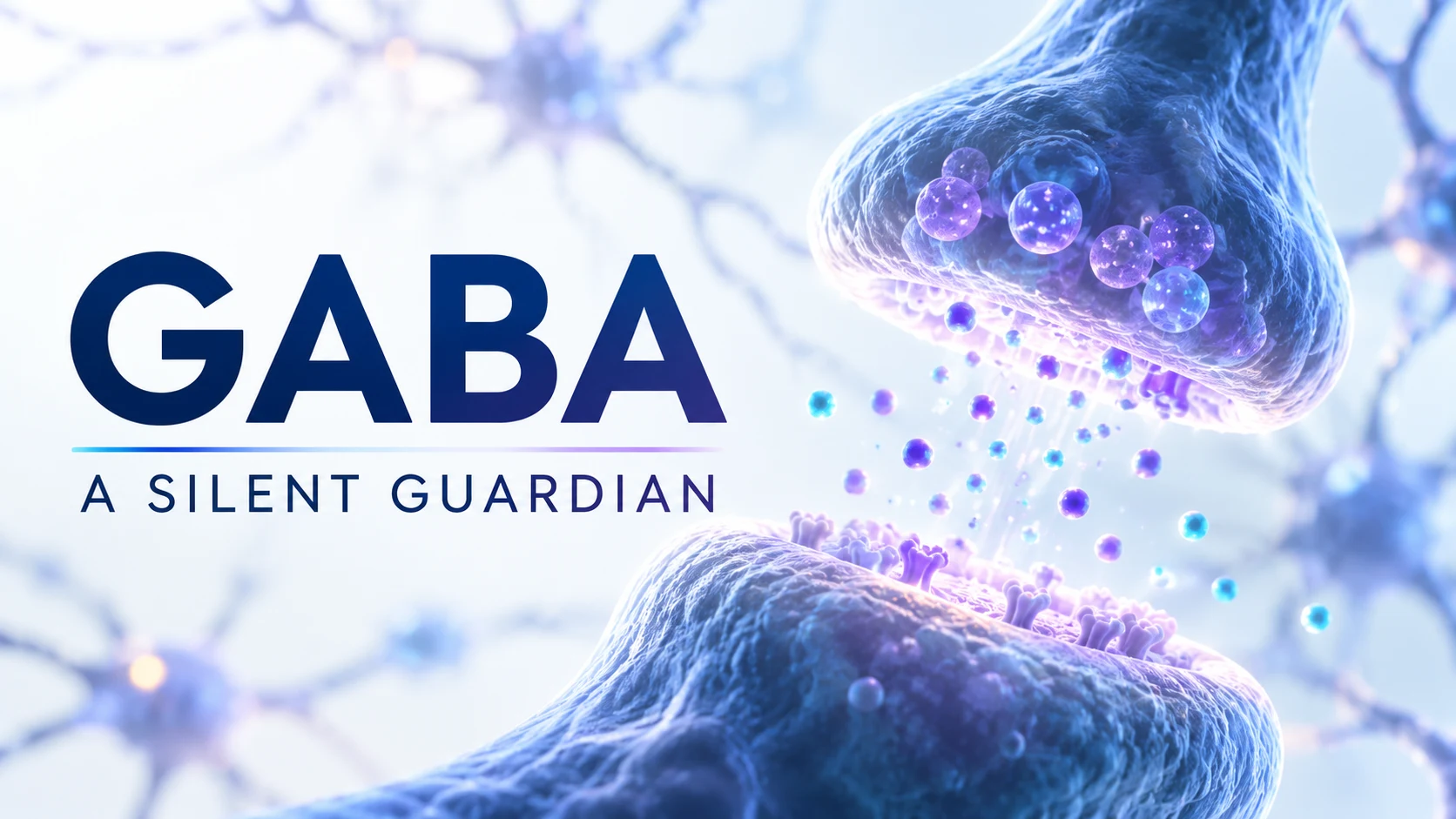
Gamma-aminobutyric acid, usually shortened to GABA, is a neurotransmitter—one of the chemical messengers nerve cells use to communicate. In the mature central nervous system, GABA is the primary inhibitory neurotransmitter: when it activates certain receptors, it can make a receiving neuron less likely to fire. That inhibitory signaling helps shape the timing and intensity of activity across brain circuits.¹
How does GABA influence brain activity?
GABA works through different receptor families. GABA-A receptors usually act quickly by opening ion channels, while GABA-B receptors work through a slower signaling pathway. The effects depend on the receptor, the brain region, and the surrounding circuit—not on a simple brain-wide “calm switch.”¹
This is one reason GABA matters to researchers: carefully changing GABA-receptor activity can alter signaling in ways that affect anxiety, sleep, movement, and other functions. It is also why a neurotransmitter’s normal role does not, by itself, tell us what causes a person’s symptoms or which treatment will help them.
What is the connection between GABA and anxiety?
GABA-related circuits help regulate anxiety responses, and some established medicines act on GABA receptors. Benzodiazepines, for example, enhance the effect of GABA at certain GABA-A receptors. They can reduce anxiety quickly for some people, but they also carry important risks—including sedation, physical dependence, and withdrawal. The FDA warns about especially serious dangers when benzodiazepines are combined with opioids or other central-nervous-system depressants.²³
This treatment connection does not mean anxiety is simply a GABA deficiency. Anxiety involves several interacting brain systems, life experiences, health factors, and patterns of learning. GABA research helps explain one part of that picture; it cannot reduce every person’s experience to one chemical level.¹
What do researchers know about GABA and depression?
Some studies have found differences in GABA measures in certain brain regions among people with depression. Those findings have made GABA an active area of research, but they do not establish that low GABA is the cause of depression or a consistent marker in every person. Researchers have also noted limits in the clinical data, including uncertainty about what measured GABA levels represent and how consistently findings apply across people.⁴
So GABA may be one piece of the biology worth studying, not a single explanation for depression. These findings are not a clinical test used in routine diagnosis or treatment selection.⁴
Do oral GABA supplements help with anxiety or depression?
GABA sold as a supplement is not the same thing as a medicine that acts on GABA receptors. Human studies of oral GABA have mostly examined stress and sleep, not whether it treats an anxiety disorder or depression. A systematic review found limited evidence for stress outcomes and very limited evidence for sleep outcomes; the authors said the research was not strong enough to draw firm conclusions about effectiveness.⁵
It is also unsettled how much oral GABA reaches the human brain and what explains the effects reported in some studies. That leaves a genuine research question—not a reason to dismiss the possibility, but not evidence that a supplement reliably raises brain GABA or treats a mental-health condition.⁵
What should I know about safety?
Supplement safety information is still limited. A U.S. Pharmacopeia review found no serious adverse events in the clinical studies it assessed, but some studies reported a temporary drop in blood pressure. The review noted a possible concern for people taking blood-pressure medicines and advised caution during pregnancy or breastfeeding because data are lacking.⁶
Supplements can vary in quality and may interact with medicines. If you are considering GABA, or already take medication that affects alertness, blood pressure, or the nervous system, ask a qualified clinician or pharmacist to review it with you. Do not stop or change a prescribed medicine on your own. For benzodiazepines in particular, abrupt dose changes can cause serious withdrawal; tapering should be planned with the prescriber.²³
Can daily habits increase GABA?
Exercise, restorative sleep, and stress-management practices can support overall health and may be worthwhile parts of a mental-health plan. But it is easy to overstate the science by claiming that a particular food, meditation practice, or workout reliably raises brain GABA enough to treat anxiety or depression. Those habits can be helpful without needing to frame them as a way to correct a neurotransmitter level.
If a routine helps you feel steadier, that matters. It can complement care, while persistent or disruptive symptoms deserve attention in their own right.
There are more options than one brain chemical
When anxiety is affecting daily life, evidence-based options include psychological treatments such as cognitive behavioral therapy and, for some people, medication. NICE guidance recommends discussing treatment choices and preferences; if medication is chosen for generalized anxiety disorder, an SSRI is among the recommended options. If an initial approach is not helping enough, a clinician can help review alternatives and next steps.⁷
GABA remains an important and active area of brain research. Understanding it can make mental health feel less mysterious, but no one needs to solve their neurotransmitters alone. A qualified professional can help match care to your symptoms, history, and goals.
Medical note
This article is for general education, not individualized treatment advice. Supplements and prescription medicines can have side effects and interactions. Discuss treatment decisions with a qualified healthcare professional who knows your medical history and other medications.
Words worth knowing
Cognitive behavioral therapy (CBT)
A structured therapy that helps people notice patterns between thoughts, feelings, and actions, then practice more helpful responses.
References
- Nuss (2015), Anxiety disorders and GABA neurotransmission: a disturbance of modulation
- U.S. Food and Drug Administration: Updated boxed warning for benzodiazepines
- FDA Drug Safety Communication: Benzodiazepines and opioid/CNS depressant risks
- Luscher et al. (2011), The GABAergic deficit hypothesis of major depressive disorder
- Hepsomali et al. (2020), Systematic review of oral GABA, stress, and sleep in humans
- Oketch-Rabah et al. (2021), United States Pharmacopeia safety review of GABA
- NICE Guideline CG113: Generalised anxiety disorder and panic disorder in adults

