
Magnesium for Anxiety: What the Evidence Really Shows
What magnesium may offer for anxiety, where the research is encouraging, and how to consider it safely.
In this article
Magnesium is a natural mineral that helps the nervous system regulate activity, and growing research suggests it may support a calmer mood for some people. It is essential for everyday brain and body function, making magnesium-rich foods and thoughtful supplementation a promising part of a broader approach to anxiety.
Why magnesium matters
Magnesium is involved in hundreds of biochemical reactions, including processes that support nerve signaling, muscle function, energy production, and blood-pressure regulation.¹ In the brain, magnesium helps regulate excitatory signaling and participates in systems involved in learning, stress responses, and sleep.
These roles help explain why getting enough magnesium may support the body's ability to handle stress. When intake is low, restoring healthy magnesium levels can give these systems the raw material they need to work well.
What the research says about anxiety
Human research offers encouraging signs. A systematic review found benefits for subjective anxiety in several groups who were already vulnerable to anxiety, including people with mild anxiety and premenstrual symptoms.² A newer review also found promising signals for anxiety and sleep, supporting continued study of magnesium as an accessible supportive option.³
The practical takeaway is hopeful: magnesium may help some people, particularly when intake is low or a deficiency is present. For many, it can be a sensible addition to a larger anxiety-support plan that includes the approaches best suited to their needs.
Magnesium and depression are not the same question
Researchers have also studied magnesium in relation to depression. Reviews have reported associations between magnesium status and mood, and early intervention findings are encouraging.⁴ This suggests that supporting healthy magnesium levels may be one useful part of caring for mood, especially alongside the treatment and support a person already finds helpful.
If low mood, loss of interest, hopelessness, or thoughts of self-harm are present, seek professional support rather than trying to correct the problem with supplements alone.
Food first, when possible
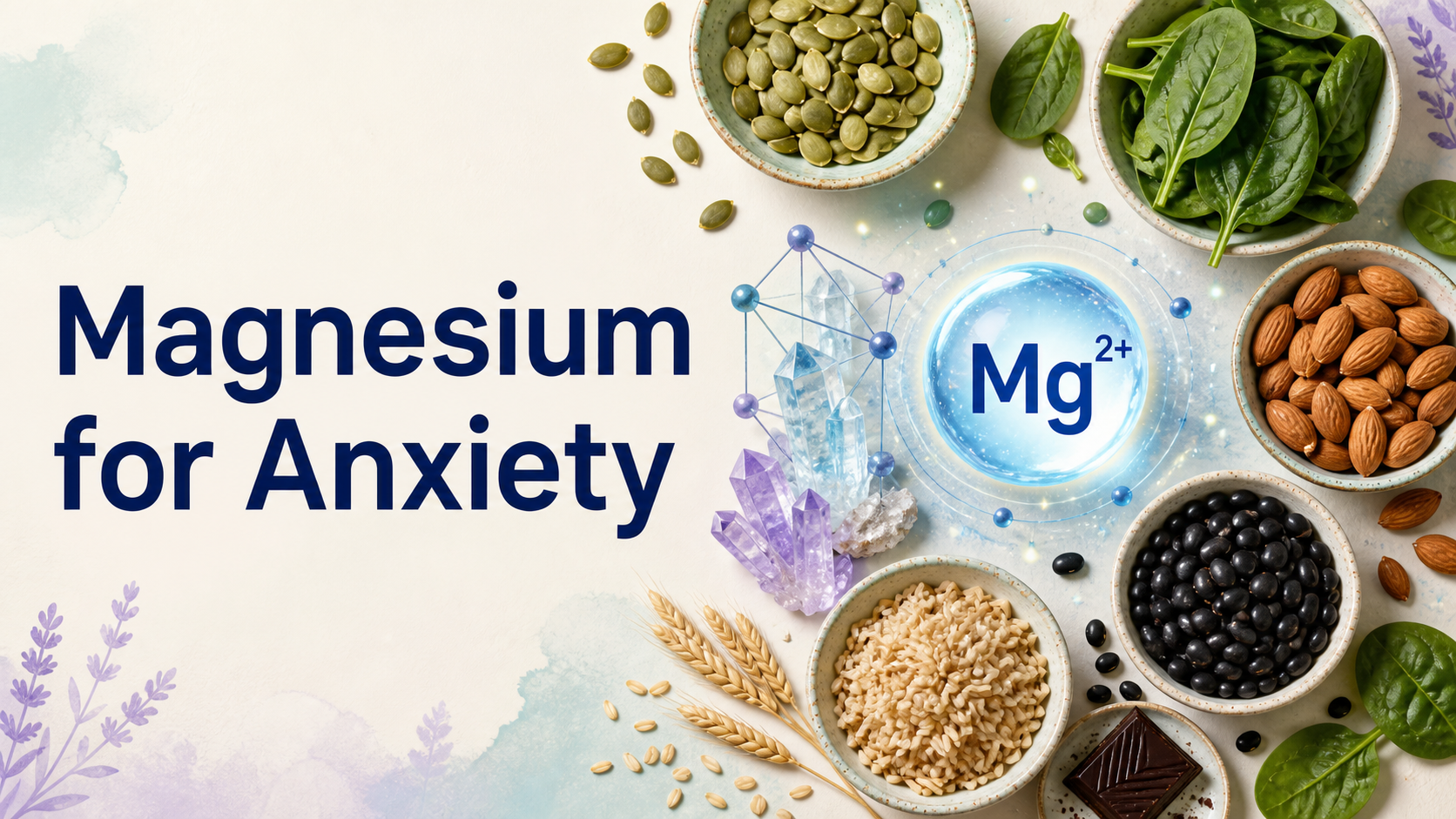
Magnesium is found in foods such as pumpkin seeds, nuts, beans, whole grains, leafy greens, and some dairy products. Food provides magnesium alongside protein, fiber, and other nutrients, and magnesium naturally present in food does not count toward the adult supplemental upper limit.¹
A varied diet is usually the most sensible foundation. A clinician or registered dietitian can help if restricted eating, digestive disease, kidney disease, or another condition makes adequate intake difficult.
Why a deficiency can be hard to detect
Magnesium is stored mostly in bone and soft tissue, while less than 1% is found in the blood.⁶ That creates a real measurement challenge: a routine serum magnesium test is useful for identifying more severe deficiency, but a result in the normal range does not always tell the full story about magnesium inside cells.
More specialized approaches—such as red-blood-cell measurements, ionized magnesium tests, urine testing, or a magnesium-loading test—can offer additional information, but they are not equally available or standardized in everyday care.⁶ There is no single quick test that perfectly captures total-body magnesium status.
This is why a clinician may consider the whole picture: diet, digestive or kidney conditions, medications, symptoms, and related mineral results alongside laboratory testing. The difficulty of measuring intracellular magnesium does not make deficiency imaginary; it means that borderline or unexplained symptoms may deserve a thoughtful conversation rather than one test result being treated as the final word.
Should you try a supplement?
A supplement may be reasonable to discuss when diet is insufficient, a clinician suspects deficiency, or another medical reason makes supplementation appropriate. Different forms of magnesium are absorbed and tolerated differently, and the amount listed as elemental magnesium is the number that matters on the Supplement Facts panel.⁵
Avoid treating a high dose as a stronger version of a low dose. For adults, the NIH lists 350 mg per day as the upper limit from supplements and medications unless a health professional recommends otherwise.¹ Higher amounts can cause diarrhea, nausea, and abdominal cramping, and very large amounts can be dangerous.
Interactions and reasons to check first
Magnesium supplements can interfere with absorption of some antibiotics and oral bisphosphonates, so timing may matter.⁵ Kidney disease can also increase the risk of magnesium accumulating in the body. Tell your prescriber and pharmacist about supplements, antacids, and laxatives you use—not just prescription medications.
Stop and seek medical advice for concerning symptoms, and do not use magnesium to delay evaluation of severe, persistent, or rapidly worsening anxiety.
A balanced bottom line
Magnesium is important to normal nervous-system function, and correcting a true deficiency is worthwhile. The research gives us good reason to be encouraged: some people may experience meaningful support, especially when low intake or deficiency is part of the picture. Magnesium can be one practical piece of a broader plan that may include therapy, sleep support, movement, social connection, and medication when clinically appropriate.
If you are considering magnesium for anxiety, bring the product, dose, and your medication list to a qualified clinician. A useful question is whether improving magnesium intake could safely support your overall plan. With the right form and amount, this simple mineral may offer another accessible way to support your mental health.
Sources
- [1] NIH Office of Dietary Supplements — Magnesium Fact Sheet
- [2] Boyle N.B., Lawton C., Dye L. — The Effects of Magnesium Supplementation on Subjective Anxiety and Stress: A Systematic Review
- [3] Examining the Effects of Supplemental Magnesium on Self-Reported Anxiety and Sleep Quality: A Systematic Review
- [4] Magnesium and mood disorders: systematic review and meta-analysis
- [5] NIH Office of Dietary Supplements — Magnesium Health Professional Fact Sheet
- [6] NIH Office of Dietary Supplements — Assessment of Magnesium Status

