
Discovering Ayahuasca: Transforming Mental Health
What is Ayahuasca?
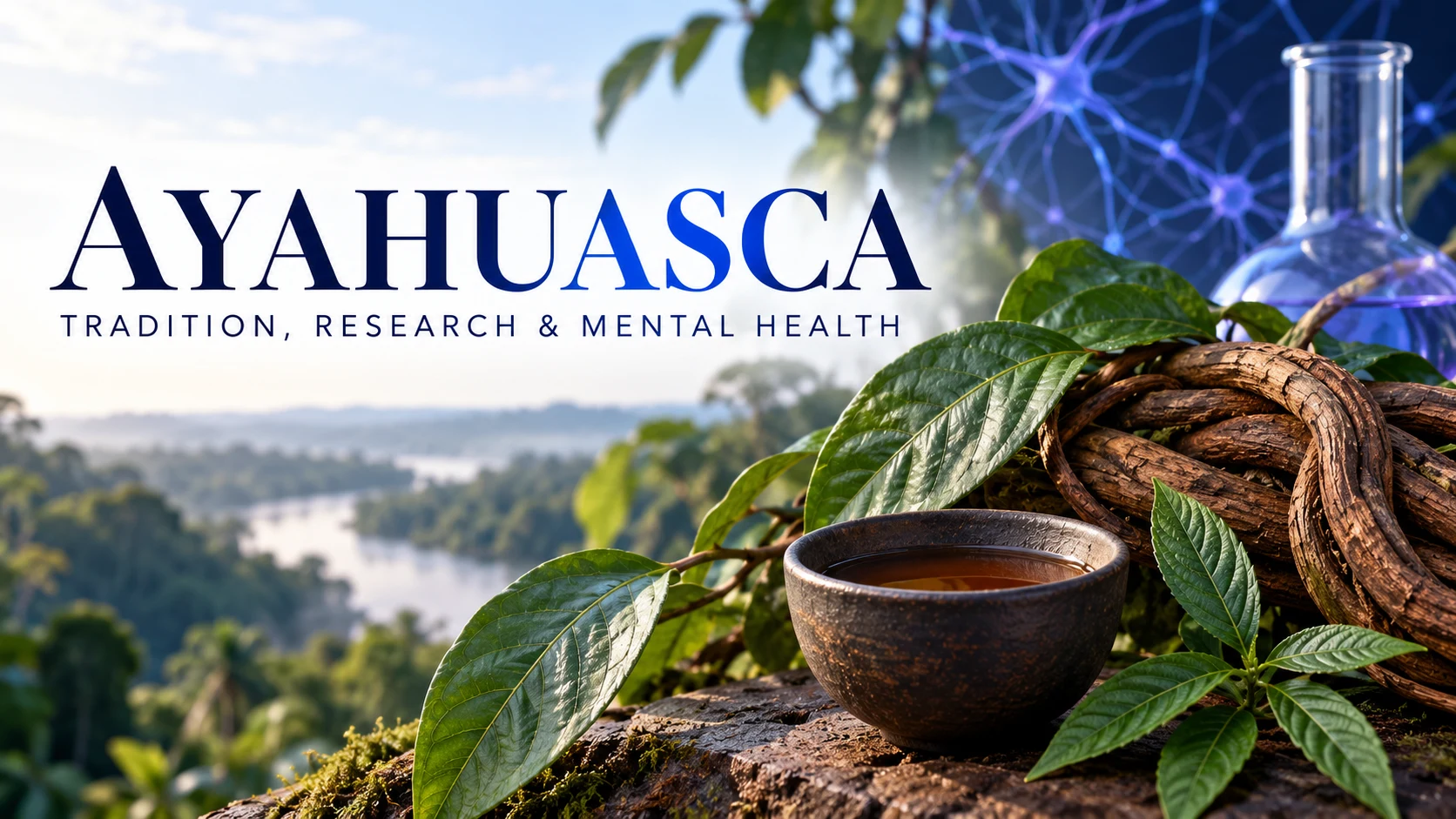
What is Ayahuasca?
Ayahuasca is a psychedelic brew originating from indigenous cultures in the Amazon basin of South America. It has been used traditionally in spiritual ceremonies by native people in Peru, Brazil, Colombia and Ecuador.
The main active ingredients in ayahuasca come from two different plants:
- DMT (N,N-Dimethyltryptamine) - A potent psychedelic compound found in various plants like Psychotria viridis. DMT produces intense visionary experiences.
- MAOIs (Monoamine oxidase inhibitors) - Ayahuasca vines like Banisteriopsis caapi contain MAOIs which allow DMT to be orally active. MAOIs prevent DMT from being broken down before crossing the blood-brain barrier.
By combining these ingredients, ayahuasca produces uniquely intense psychedelic effects that can last 4-8 hours. It induces strong visual and auditory hallucinations, spiritual experiences, emotional catharsis and insights.
History and Traditional Use
Ayahuasca has been used for centuries in spiritual ceremonies and rituals by indigenous tribes throughout the Amazon basin. The brew contains DMT, a psychedelic compound, and MAOIs from the Banisteriopsis caapi vine. When combined, these ingredients allow DMT to have psychoactive effects.
Ayahuasca was traditionally used by shamans or healers in religious and healing ceremonies. Indigenous tribes like the Urarina, Secoya, and Shuar have long histories of consuming ayahuasca for spiritual purposes. They use the plant medicine to open minds, connect to nature, contact spirits, and gain wisdom.
Ayahuasca rituals were often guided by shamans who prepared the brew. The ceremonies focused on spiritual healing, insight, and guidance. Participants reported heightened senses, vivid visions, and life-changing introspective journeys after consuming ayahuasca.
So while ayahuasca has recently sparked interest for its therapeutic potential, its origins are deeply rooted in indigenous traditions. For centuries, Amazonian tribes have consumed this plant medicine for its spiritual and introspective properties.
Mechanism of Action
Ayahuasca contains the psychedelic compound dimethyltryptamine (DMT), as well as monoamine oxidase inhibitors (MAOIs) from the Banisteriopsis caapi vine. MAOIs prevent the breakdown of DMT in the digestive system, allowing it to become orally active when ingested as ayahuasca.
The psychedelic effects of ayahuasca are mediated by serotonin receptors in the brain. DMT is structurally similar to serotonin and acts as a partial agonist at several serotonergic receptors, particularly 5-HT2A receptors. Activation of the 5-HT2A receptor is responsible for the subjective hallucinogenic and psychedelic effects.
DMT also binds to sigma-1 receptors, which may modulate its psychoactive effects. The MAOIs in ayahuasca boost serotonin levels, which likely contributes to the overall effects as well. Through its complex serotonergic mechanism, ayahuasca produces an altered state of consciousness characterized by vivid perceptual changes, spiritual experiences, and psychological introspection.
Evidence for Mental Health Applications
While ayahuasca has been used traditionally in spiritual contexts for centuries, research into its potential therapeutic applications for mental health is more recent and still emerging.
Some preliminary clinical trials and observational studies show promising benefits of ayahuasca for conditions like depression, anxiety and post-traumatic stress disorder (PTSD).
- In a 2015 open-label trial, 17 patients with major depressive disorder were given two ayahuasca sessions. Depression scores were significantly decreased between baseline and 1, 7 and 21 days after ayahuasca intake, suggesting an antidepressive effect.
- A 2018 randomized placebo-controlled trial found that a single ayahuasca dose significantly reduced depressive symptoms in the ayahuasca group compared to placebo. The antidepressant effect was still significant at 21 days after intake.
- In an observational study of ayahuasca drinkers, long-term ayahuasca use was associated with less problematic alcohol, tobacco and cocaine use, and lower scores on hopelessness, depression and anxiety scales.
While these preliminary studies show promise, more rigorous research is still needed to better understand ayahuasca's therapeutic mechanisms and safety profile for mental health applications. Larger clinical trials with longer follow-up are required to fully evaluate ayahuasca's efficacy as a treatment for conditions like depression, anxiety and PTSD. More research is also needed on optimal dosing protocols and the potential risks of combining ayahuasca with psychiatric medications.
Overall, early research indicates ayahuasca may have beneficial effects on mental health, especially mood and anxiety disorders. However, due to limited data, ayahuasca cannot currently be recommended as a standalone treatment. More research is warranted to further elucidate ayahuasca's therapeutic potential.
Benefits vs. Other Medications
As an experimental treatment, ayahuasca warrants more research to fully understand its benefits for mental health compared to commonly used medications. However, some initial studies suggest potential advantages:
- Ayahuasca may act rapidly to reduce symptoms of depression and anxiety, while antidepressants can take weeks to achieve their full effects. Some anecdotal reports describe relief from depression after just one ayahuasca session.
- The psychedelic compounds in ayahuasca like DMT may stimulate growth of new neural connections. This ability to increase neuroplasticity could potentially help patients overcome ingrained negative thought patterns. More research is needed to verify these brain benefits.
- The mystical experiences often reported after taking ayahuasca involve a sense of reconnection with oneself, others, and the natural world. This may confer psychological benefits for some individuals.
Despite these possible advantages, ayahuasca should not replace conventional mental health treatment without medical supervision. Serotonin-altering medications must not be mixed with ayahuasca due to the risk of serotonin syndrome. Ultimately, much more clinical research is required to conclusively compare ayahuasca to medications. However, its rapid effects and neuroplasticity-promoting properties suggest it may eventually complement standard antidepressant and antianxiety prescriptions.
Dosing
-Effects: The effects of ayahuasca typically last 4-8 hours. Unlike prescription antidepressants, which must be taken daily, ayahuasca only needs to be taken occasionally to maintain its effects. While undergoing ayahuasca therapy, it is common to participate in multiple ayahuasca ceremonies spaced days or weeks apart.
-Ceremonial use: Ayahuasca has traditionally been taken in a ceremonial context guided by an experienced shaman. The shaman helps prepare the ayahuasca brew and provides spiritual guidance during the experience. This traditional framework and intention setting is considered important for ensuring a safe, therapeutic experience. Taking ayahuasca recreationally or without proper support is not recommended.
-Not approved as medication: While ayahuasca shows promise as a therapeutic tool, it has not been approved as a medication by regulatory agencies like the FDA. The legal status of ayahuasca varies between countries. More research is still needed to fully understand its risks, benefits and optimal therapeutic use. Patients should use caution and consult local laws before seeking ayahuasca ceremonies.
Side Effects and Risks
Ayahuasca use does come with some potential side effects and risks that should be considered.
- Nausea, vomiting, and diarrhea are common side effects during the ayahuasca experience. These effects are usually temporary, but can be quite uncomfortable.
- There is a risk of serotonin syndrome when ayahuasca is combined with certain medications, especially antidepressants. Serotonin syndrome is a potentially life-threatening condition caused by too much serotonin accumulating in the body.
- There are also potential psychiatric risks to ayahuasca use. It can exacerbate existing mental health conditions or trigger latent psychiatric disorders in those predisposed. There have been reported cases of ayahuasca triggering manic episodes, psychosis, and even suicidality in some individuals.
- Ayahuasca should not be taken by those with heart conditions, as it can raise blood pressure and heart rate. Blood pressure spikes can be dangerous.
- Pregnant women should avoid ayahuasca, as the safety during pregnancy is uncertain.
Overall, while ayahuasca shows promise as a therapeutic tool, it is not without risks. Working with an experienced guide in a safe setting can help reduce adverse effects, but they cannot be eliminated entirely. Each individual must carefully weigh the potential benefits and risks before deciding to use ayahuasca.
Positives
Ayahuasca has demonstrated some potential benefits for mental health, when used appropriately.
- Rapid antidepressant effects have been observed in some people after just a single dose. Research indicates ayahuasca may help "reset" areas of the brain impacted by depression.
- The unique subjective experience induced by ayahuasca is highly valued by some individuals. They report feelings of love, joy, and connecting with something greater than themselves.
- For people struggling with substance abuse issues like alcoholism, some studies have found ayahuasca helpful in reducing cravings and promoting abstinence. The intense introspection it provides may support changing ingrained behaviors.
- Ayahuasca rituals in traditional settings are often focused on psychological healing and developing self-awareness. Many participants find the group ceremonies therapeutic.
- Some people feel ayahuasca gives them spiritual insights and helps them reflect on past trauma. They find meaning and catharsis through the experience.
- Short-term improvements in mood and reductions in anxiety or distress have been noted after ayahuasca sessions. For some with treatment-resistant mental health conditions, it provides temporary relief.
Negatives or Cons
Ayahuasca therapy has some potential downsides to consider:
- Limited evidence: There is currently limited scientific evidence on the therapeutic effects of ayahuasca. More rigorous clinical trials are needed to fully understand its mental health benefits and risks. Most research so far has been small pilot studies or observational research.
- Safety concerns: Ayahuasca contains DMT, a powerful psychedelic compound. It can produce intense hallucinations, emotional disturbances, vomiting, diarrhea, and increased blood pressure and heart rate. These effects may be dangerous for those with certain medical conditions. Though rare, there have also been a few reported deaths associated with ayahuasca ceremonies. Proper screening and precautions are essential.
- Difficult subjective experience: Ayahuasca causes powerful alterations in consciousness, perception, and emotions that some find extremely challenging or traumatic. The hallucinogenic effects are highly variable and hard to predict. Users need appropriate psychological preparation and support to process and integrate these profound inner experiences.
Conclusion
Overall, the evidence suggests ayahuasca may have potential as an antidepressant and to help treat other mental health conditions. However, much more research is still needed to fully understand its effects, safety profile, and therapeutic potential.
A few small studies have shown positive effects on depression, anxiety, PTSD, and addiction when ayahuasca is administered in a controlled, therapeutic setting. However, these studies are limited by their small sample sizes. Larger, randomized controlled trials are needed to truly demonstrate efficacy. There are also concerns about short and long-term side effects.
Ayahuasca remains illegal in many parts of the world and has risks of adverse reactions. Any therapeutic use would require careful screening and monitoring by qualified mental health professionals. It is not something that should be self-administered without medical supervision.
While early evidence is promising, the jury is still out regarding ayahuasca as an antidepressant or mental health aid. Any potential benefits must be carefully weighed against the risks. More research is needed before it can be responsibly recommended or integrated into mainstream psychiatry. For now, conventional treatments remain a much safer option for most patients. But future research may shed more light on if and how ayahuasca could potentially help those suffering from treatment-resistant mental health conditions.
By Birk Gundersen, RN, BSN.
Words worth knowing
Neuroplasticity
The brain’s ability to change and adapt through learning, experience, and recovery.

