
Cymbalta: Unlocking Hope for a Brighter Future
What is Cymbalta (Duloxetine)?
In this article
What is Cymbalta (Duloxetine)?
Overview
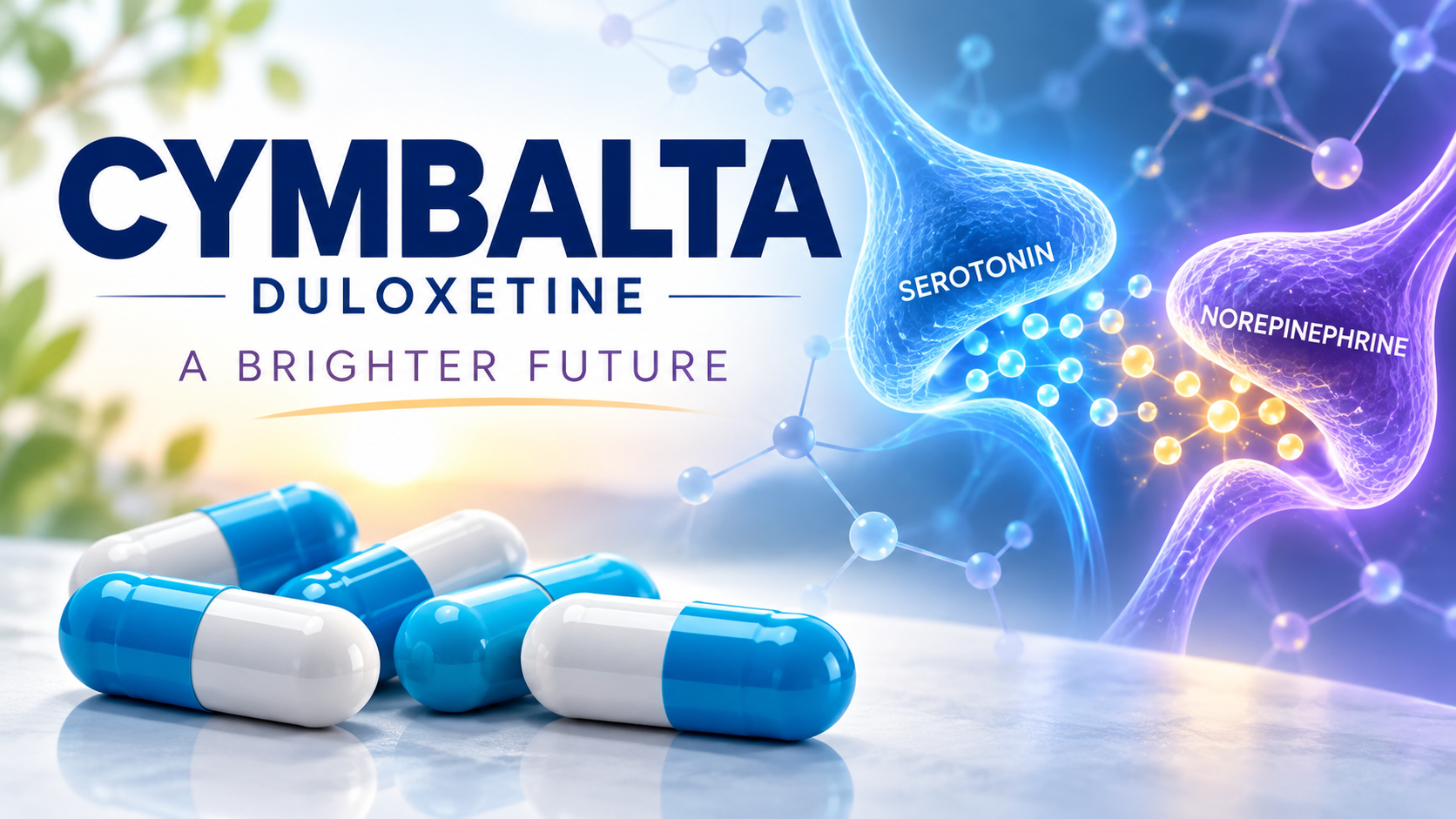
Cymbalta, also known as duloxetine, is a medication used to treat major depressive disorder, generalized anxiety disorder, fibromyalgia, and chronic pain conditions such as neuropathic pain and osteoarthritis pain. It is classified as a serotonin-norepinephrine reuptake inhibitor (SNRI) and works by increasing the levels of both serotonin and norepinephrine in the brain.
History of Cymbalta (Duloxetine)
Cymbalta was developed by Eli Lilly and Company and was approved by the United States Food and Drug Administration (FDA) in 2004 for the treatment of major depressive disorder. It was later approved for the treatment of generalized anxiety disorder, fibromyalgia, and chronic pain conditions.
Mechanism of Action of Cymbalta (Duloxetine)
Cymbalta works by selectively inhibiting the reuptake of both serotonin and norepinephrine in the brain, leading to increased levels of these neurotransmitters. This is thought to improve mood and reduce symptoms of depression, anxiety, fibromyalgia, and chronic pain conditions.
Evidence for Use
Cymbalta has been shown to be effective in treating major depressive disorder, generalized anxiety disorder, fibromyalgia, and chronic pain conditions. In clinical trials, Cymbalta was found to be more effective than placebo in reducing symptoms of these conditions. It has also been used off-label to treat other mental health conditions such as bipolar disorder and post-traumatic stress disorder (PTSD).
Side Effects/ Adverse Reactions/ Contradictions
Like all medications, Cymbalta can cause side effects. The most common side effects include nausea, dry mouth, constipation, and dizziness. These side effects are usually mild and go away on their own. However, if you experience any severe or persistent side effects, you should contact your doctor immediately. Cymbalta can also increase the risk of suicidal thoughts and behaviors in some people, especially in children, teenagers, and young adults.
Cymbalta is contraindicated in patients with a hypersensitivity to duloxetine or any of the components of the medication. It should also be used with caution in patients with a history of mania or hypomania, seizure disorders, and bleeding disorders.
Positives or Pros of Cymbalta (Duloxetine)
Cymbalta is effective in treating major depressive disorder, generalized anxiety disorder, fibromyalgia, and chronic pain conditions. It may also be helpful for treating other mental health conditions such as bipolar disorder and PTSD. Additionally, Cymbalta has a lower risk of causing sexual side effects compared to other antidepressant medications.
Negatives or Cons of Cymbalta (Duloxetine)
Cymbalta can cause side effects, and some people may experience withdrawal symptoms if they stop taking the medication abruptly. It may also interact with other medications, including some antidepressants and blood thinners. Additionally, Cymbalta can take several weeks to start working, and its effectiveness may vary depending on the individual and their specific symptoms.
In conclusion, Cymbalta (Duloxetine) is an effective medication for treating major depressive disorder, generalized anxiety disorder, fibromyalgia, and chronic pain conditions. It works by selectively inhibiting the reuptake of both serotonin and norepinephrine in the brain, leading to increased levels of these neurotransmitters. However, it can cause side effects and may not be suitable for everyone. It is important to talk to your doctor about any concerns you may have before starting Cymbalta or any other medication.

