Curcumin for Anxiety and Depression: What the Evidence Shows
A concise guide to curcumin’s possible mood benefits, what clinical studies suggest, and the safety questions worth discussing.
In this article
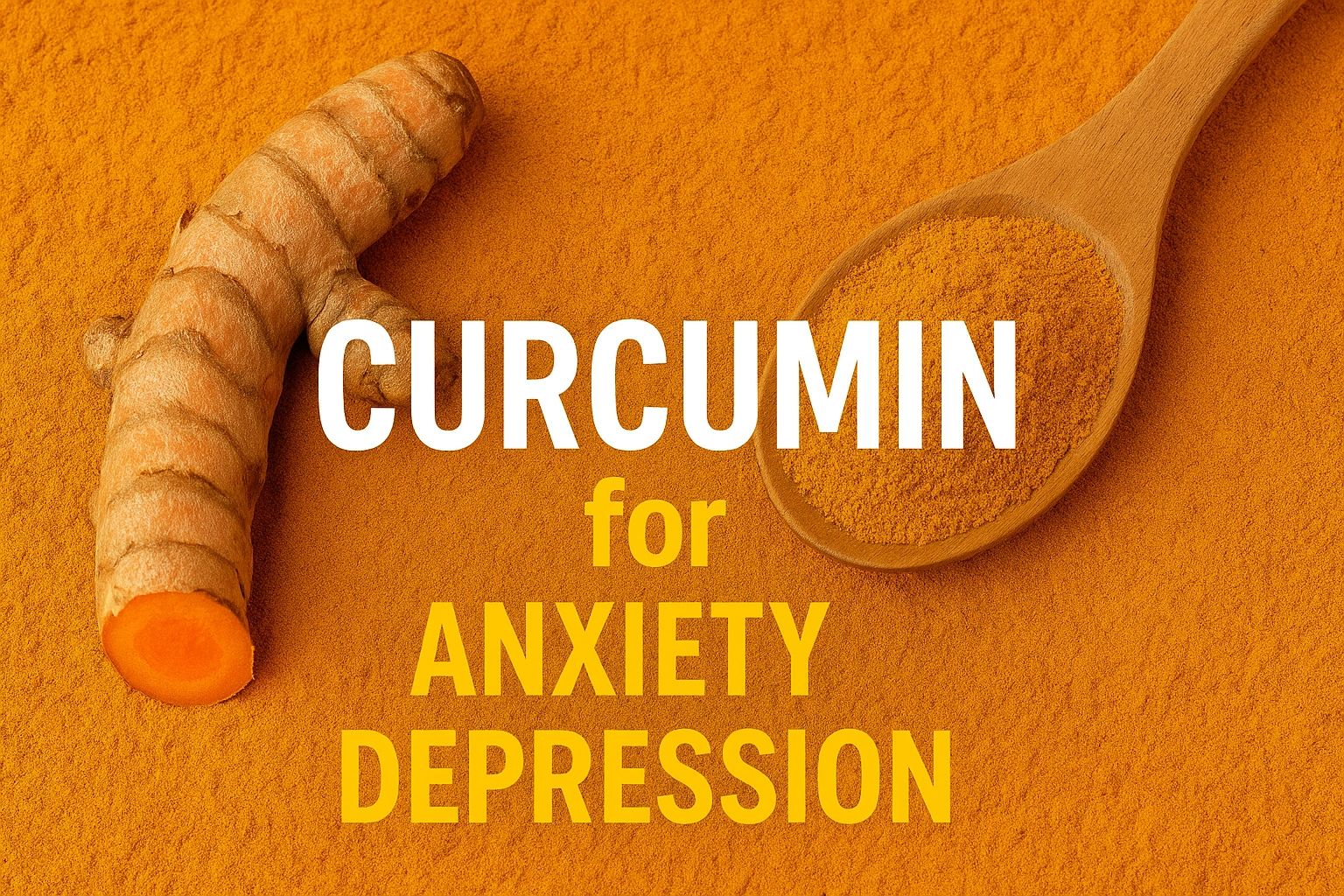
Curcumin is the best-studied active compound in turmeric. Early clinical research suggests it may modestly improve depressive symptoms and may help anxiety for some people, especially as an adjunct to standard care. The most useful way to view it is as a promising supplement with real but still developing evidence.
Medical note: This article is general education, not individualized treatment advice. Talk with a qualified clinician before starting curcumin, especially if you take prescription medication, have gallbladder or bleeding problems, are pregnant or breastfeeding, or have a planned procedure.
Curcumin is a natural compound in turmeric. It has attracted interest in mental health because it can influence several systems involved in mood, including inflammation, oxidative stress, cellular signaling, and neuroplasticity. Those effects give researchers a reason to study it, and early human trials are encouraging enough to justify continued interest.
What the Research Suggests
Several randomized trials and reviews have found that curcumin can improve depressive-symptom scores more than placebo in some groups. A 2014 randomized trial found benefit in people with major depression, and a 2019 meta-analysis reported an overall antidepressant signal across clinical studies.[1][2] Some studies also suggest improvements in anxiety, particularly when anxiety occurs alongside depression or another health condition.[3]
The results are not identical from study to study. Trials differ in dose, formulation, treatment length, and participant health. That variation makes it difficult to name one ideal product or promise the same result for everyone. Still, the pattern is hopeful: curcumin appears to be a reasonable topic for a clinician-guided conversation, especially as a complementary option for mild or residual symptoms.
How Curcumin Might Help
Curcumin may support mood through several overlapping pathways. It can influence inflammatory signals, help protect cells from oxidative stress, and affect brain-derived neurotrophic factor, a protein involved in learning and neural adaptability. Preclinical work also points to possible effects on serotonin, dopamine, stress-hormone regulation, and cellular energy systems.[2][4]
This broad activity may matter because depression and anxiety are not driven by one pathway in every person. A compound that gently supports several systems could be useful for some people, even if it does not act like a conventional antidepressant. The clinical studies are the most important evidence, and they support cautious optimism while research continues.
Choosing a Form and Using It
Curcumin is absorbed poorly on its own, so supplements often use piperine, a phytosome, essential oils, micellar delivery, or another formulation intended to improve bioavailability.[5] Clinical studies have commonly used approximately 500 mg once or twice daily, but products are not interchangeable and a higher dose is not automatically better.
If a clinician agrees that a trial is appropriate, choose a reputable product with clear curcuminoid content and independent quality testing. Taking it with food may improve tolerance. Curcumin is not an acute anxiety treatment; studies generally evaluate several weeks of consistent use. Keep track of mood, anxiety, sleep, side effects, and any changes to prescribed treatment.
Safety and Interactions
The most common problems are digestive upset, nausea, diarrhea, headache, or dizziness. Concentrated supplements can also affect blood clotting, blood sugar, blood pressure, and bile flow. Use particular caution with warfarin, clopidogrel, aspirin, diabetes or blood-pressure medication, gallstones, bile-duct disease, and before surgery.[6][7]
Curcumin should complement—not replace—care for significant depression, panic, or suicidal thinking. If symptoms are severe, worsening, or interfering with daily life, professional treatment deserves priority. A clinician or pharmacist can review the exact product and check for interactions before you begin.
A Practical Takeaway
Curcumin is not just a kitchen spice in the research conversation: clinical studies suggest it may offer a modest mood benefit, and its anti-inflammatory and neuroprotective properties provide plausible reasons to keep studying it. For some people, it may be a useful addition to therapy, medication, sleep, movement, and social support.
The encouraging path is a measured one: use a well-made product, involve a healthcare professional, allow several weeks to evaluate it, and keep established treatment in place unless your prescriber recommends a change. Curcumin may not be the whole answer, but it could become one helpful piece of a broader plan.
References
[1] Sanmukhani J, et al. Efficacy and safety of curcumin in major depressive disorder: a randomized controlled trial. Phytotherapy Research. 2014. DOI: 10.1002/ptr.5025.
[2] Fusar-Poli L, et al. Curcumin for depression: a meta-analysis. Critical Reviews in Food Science and Nutrition. 2019. DOI: 10.1080/10408398.2019.1653260.
[3] Esmaily H, et al. Effects of curcumin on anxiety and depression in obese individuals: a randomized controlled trial. Chinese Journal of Integrative Medicine. 2015. DOI: 10.1007/s11655-015-2160-z.
[4] Ramaholimihaso T, et al. Curcumin in depression: potential mechanisms of action and current evidence. Frontiers in Psychiatry. 2020. DOI: 10.3389/fpsyt.2020.572533.
[5] Lopresti AL, et al. Curcumin for the treatment of major depression: a randomized, double-blind, placebo-controlled study. Journal of Affective Disorders. 2014. DOI: 10.1016/j.jad.2014.06.001.
[6] Medsafe New Zealand. Beware: turmeric/curcumin-containing products can interact with anticoagulant and antiplatelet medicines. 2019.
[7] Mount Sinai. Turmeric (Curcuma longa) herb monograph.
Words worth knowing
Neuroplasticity
The brain’s ability to change and adapt through learning, experience, and recovery.