
Ashwagandha for Anxiety: What the Evidence and Safety Facts Show
Ashwagandha may help stress and anxiety for some people, but the supplement’s benefits, limits, and safety considerations matter.
In this article
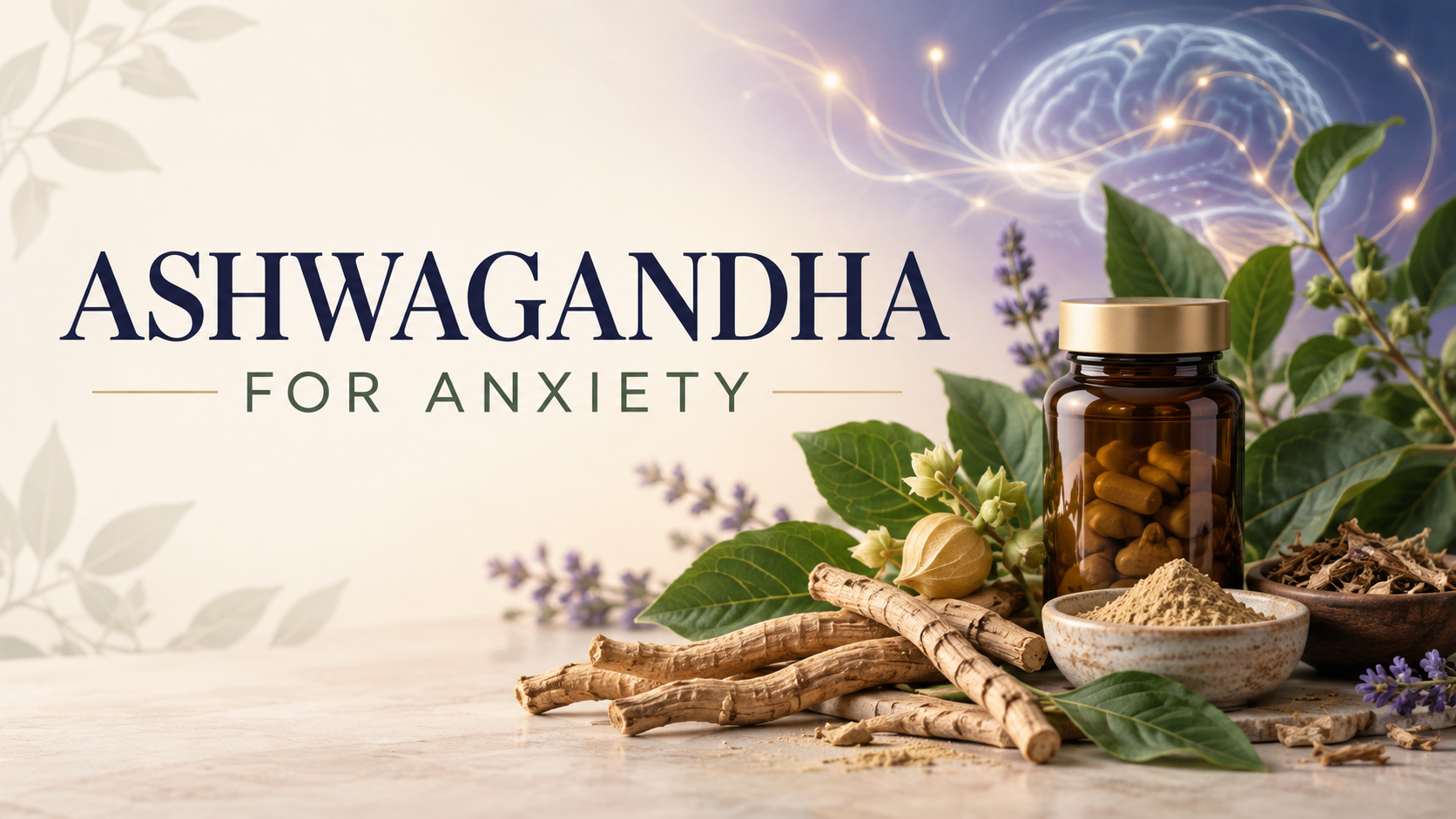
Ashwagandha is an herbal supplement used in Ayurvedic medicine and increasingly studied for stress, sleep, and anxiety. Early clinical trials are encouraging, but products and doses vary, and it is not risk-free. A thoughtful approach can hold both ideas at once: some people may benefit, and safety screening still matters.
Medical note: This article is general education, not individualized treatment advice. Talk with a qualified clinician before using ashwagandha, especially if you are pregnant or breastfeeding, have thyroid or liver disease, have an autoimmune condition, or take prescription medication.
Stress can show up as worry, muscle tension, poor sleep, irritability, fatigue, or a body that never seems to switch off. Ashwagandha is often marketed as an “adaptogen,” meaning a plant thought to help the body respond to stress. The research is promising enough to be worth understanding, but marketing claims often run ahead of the evidence.
What Is Ashwagandha?
Ashwagandha, also called Withania somnifera, is a shrub whose roots and sometimes leaves are used in supplements. Preparations may contain different extracts, plant parts, concentrations, and active compounds, so two products labeled “ashwagandha” may not be equivalent.[1]
Researchers have studied it for stress, sleep, anxiety, athletic recovery, and other outcomes. The most relevant evidence for mental health involves perceived stress and anxiety symptoms, not proof that it treats every anxiety disorder.
What the Research Suggests
Several small randomized trials have reported lower stress or anxiety scores in adults taking ashwagandha compared with placebo. Some studies also found changes in perceived stress or cortisol, and a systematic review concluded that the overall signal was encouraging while emphasizing limitations in study size, product consistency, and study quality.[2][3]
That is a hopeful starting point. It suggests ashwagandha may be useful for some people dealing with stress-related symptoms, particularly when sleep and general tension are also involved. Larger and better-standardized trials are still needed to determine who benefits most, which preparations work best, and how durable the effects are.
How It Might Help
Ashwagandha may influence stress-response systems, sleep, inflammation, and signaling involving GABA and other neurotransmitters. These possible effects could help explain why some participants report feeling calmer or sleeping better.[2]
A biological explanation is useful, but the practical test is whether a person experiences meaningful improvement without unacceptable side effects. Supplements should be judged by both potential benefit and real-world safety—not by a mechanism alone.
Safety and Interactions
Short-term studies often describe ashwagandha as reasonably well tolerated, with possible nausea, loose stools, stomach upset, drowsiness, or headache. Rare cases of liver injury have been reported, including jaundice and significant itching. Stop the supplement and seek medical care for yellowing skin or eyes, dark urine, unusual fatigue, severe abdominal pain, or persistent nausea.[4]
Ashwagandha may affect thyroid hormones and may interact with thyroid medication, sedatives, diabetes medication, blood-pressure medication, immunosuppressants, and other drugs. It may not be appropriate during pregnancy or breastfeeding, with autoimmune disease, or around surgery. Bring the exact label to a clinician or pharmacist before starting it.
A Practical Way to Think About It
If a clinician agrees that a trial is reasonable, choose a reputable product with a clearly identified extract, follow the label rather than escalating the dose, and track anxiety, sleep, mood, and side effects for several weeks. Avoid stacking multiple calming supplements at once; it becomes difficult to know what is helping or causing problems.
Ashwagandha should complement—not replace—therapy or established treatment for persistent, severe, or impairing anxiety. Cognitive behavioral therapy, regular sleep, movement, social support, and appropriate medication remain important options. For some people, ashwagandha may be a helpful addition; for others, its risks or interactions may outweigh its possible benefit.
References
[1] National Center for Complementary and Integrative Health. Ashwagandha: Usefulness and Safety.
[2] Lopresti AL, et al. An investigation into the stress-relieving and pharmacological actions of an ashwagandha extract. Medicine. 2019.
[3] Pratte MA, et al. An alternative treatment for anxiety: a systematic review of human trial results reported for the Ayurvedic herb ashwagandha. Journal of Alternative and Complementary Medicine. 2014.
[4] LiverTox. Ashwagandha. National Institute of Diabetes and Digestive and Kidney Diseases.
Words worth knowing
Cognitive behavioral therapy (CBT)
A structured therapy that helps people notice patterns between thoughts, feelings, and actions, then practice more helpful responses.

