
Acamprosate for Anxiety: What the Evidence Suggests
Acamprosate is approved to support alcohol abstinence. Small studies have explored anxiety benefits, but it is not an established anxiety treatment.
In this article
Acamprosate is best known as a medication that helps some people maintain abstinence from alcohol. Because it influences glutamate and GABA signaling, researchers have also wondered whether it could help anxiety. Early reports are interesting, but the evidence remains limited and any use for anxiety would be off-label and clinician-guided.
Medical note: This article is general education, not individualized treatment advice. Acamprosate should be prescribed and monitored by a qualified clinician. Do not use it to manage anxiety on your own, change the dose, or stop it without discussing the plan with the prescriber.
Anxiety and alcohol use can reinforce each other. Some people drink to quiet worry, then experience more anxiety as alcohol wears off or as recovery begins. A medication that supports abstinence can therefore have an important indirect mental-health benefit, even when it is not being used as a primary anxiety treatment.
What Acamprosate Is For
Acamprosate is approved to help maintain abstinence in adults with alcohol use disorder who have already stopped drinking. It is thought to help stabilize the glutamate and GABA systems that can remain dysregulated during recovery.[1] It does not treat alcohol withdrawal, prevent intoxication, or remove cravings instantly.
The usual adult dose is 666 mg three times daily, although the dose may be lower with reduced kidney function. Because the medication is cleared primarily through the kidneys, kidney history and current medications matter before treatment begins.[1]
Why Researchers Are Interested in Anxiety
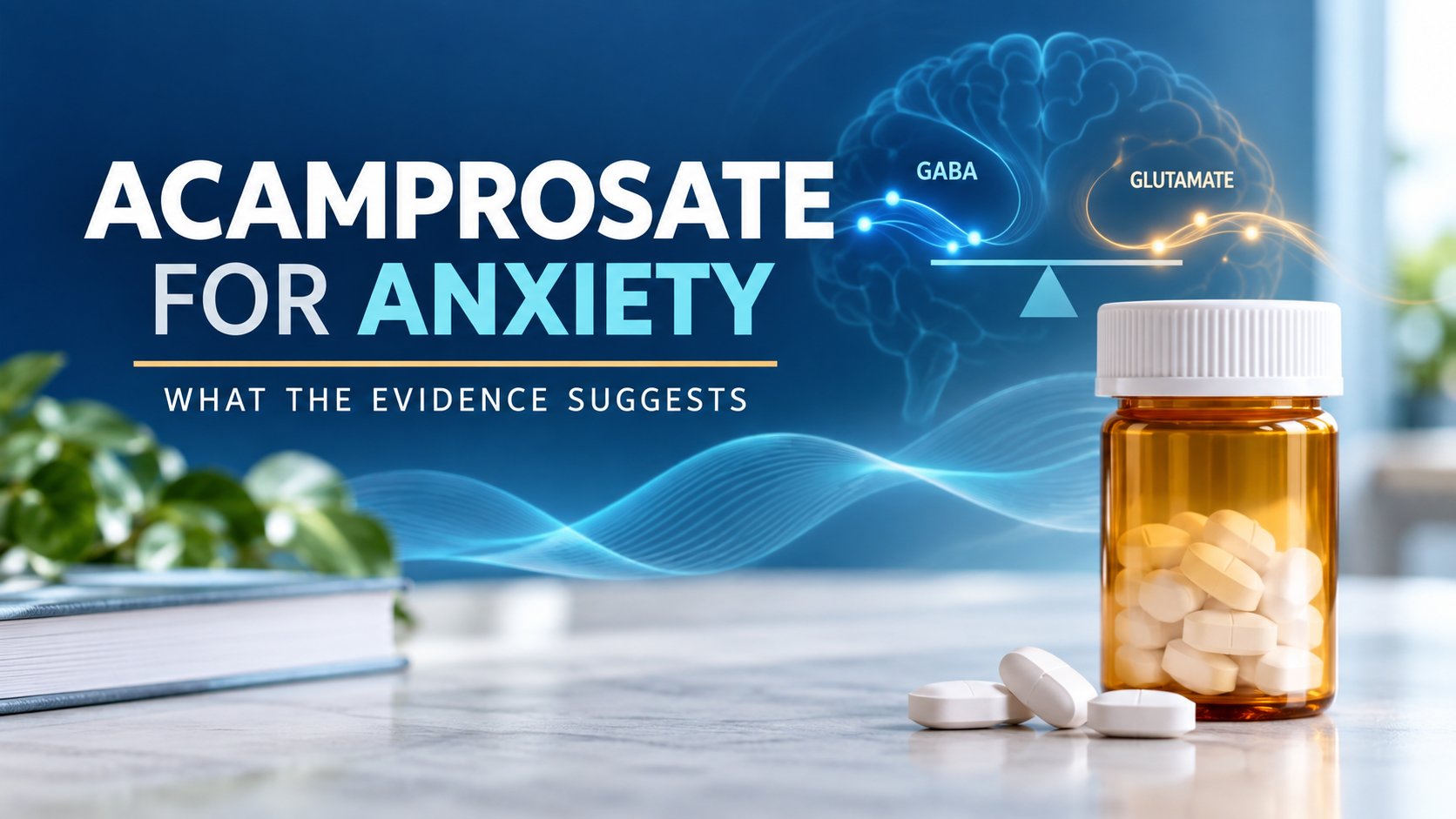
Glutamate is a major excitatory neurotransmitter, while GABA helps regulate inhibitory or calming signaling. Acamprosate’s effects on this balance have led researchers to explore whether it might reduce excessive arousal, particularly in people whose anxiety is connected to alcohol recovery.[2]
A small open-label study reported meaningful reductions in anxiety for some participants with treatment-resistant anxiety, and a case report described benefit when acamprosate was used as augmentation.[3][4] These findings provide a reason to continue studying the medication, but they do not establish it as a general treatment for generalized anxiety disorder, panic disorder, or depression.
What the Evidence Means in Practice
The current evidence is preliminary: small samples, limited controls, and specialized patient groups make it difficult to know who is most likely to benefit. Acamprosate should not displace better-established treatments such as psychotherapy, approved medications, peer support, and recovery care.
For someone who has alcohol use disorder and ongoing anxiety after stopping alcohol, acamprosate may be worth discussing as one part of a larger plan. The possible benefit may come from supporting recovery and reducing alcohol-related nervous-system instability, not necessarily from acting like a standard anti-anxiety medication.
Side Effects and Safety
Common side effects include diarrhea, nausea, abdominal discomfort, headache, dizziness, insomnia, weakness, and itching. Some people report mood changes or anxiety, so new or worsening symptoms should be discussed with the prescriber rather than assumed to be part of recovery.
Acamprosate is contraindicated in severe kidney impairment and requires dose adjustment in moderate impairment. It is not known for the same liver toxicity concerns as some alcohol-use medications, but all medical conditions and medications should still be reviewed. Seek urgent help for severe allergic symptoms, confusion, fainting, or suicidal thoughts.
A Practical Takeaway
Acamprosate is a legitimate medication with an important role in alcohol-recovery care. Its possible anxiety benefit is an encouraging research lead, especially for people whose anxiety is intertwined with alcohol use and early abstinence, but it is not yet a proven stand-alone anxiety treatment.
If anxiety remains intense after stopping alcohol, ask a clinician to evaluate both conditions together. A thoughtful plan may combine recovery support, therapy, sleep and routine changes, and medication when appropriate. Acamprosate could be one useful piece for the right person—but the right person is determined through careful clinical assessment.
References
[1] DailyMed. Campral (acamprosate calcium) prescribing information.
[2] Mason BJ, Heyser CJ. Acamprosate: a prototypic neuromodulator in the treatment of alcohol dependence. CNS & Neurological Disorders - Drug Targets. 2010.
[3] Phelps J, et al. Acamprosate calcium may be effective augmentation therapy in patients with treatment-resistant anxiety. Annals of Pharmacotherapy. 2006. DOI: 10.1345/aph.1P353.
[4] Myrick H, et al. Acamprosate in the treatment of anxiety disorders: an open-label study. Journal of Clinical Psychopharmacology. 2009. PMCID: PMC2781041.
Words worth knowing
Insomnia
A sleep disorder involving persistent difficulty falling asleep, staying asleep, or getting restorative sleep.

